
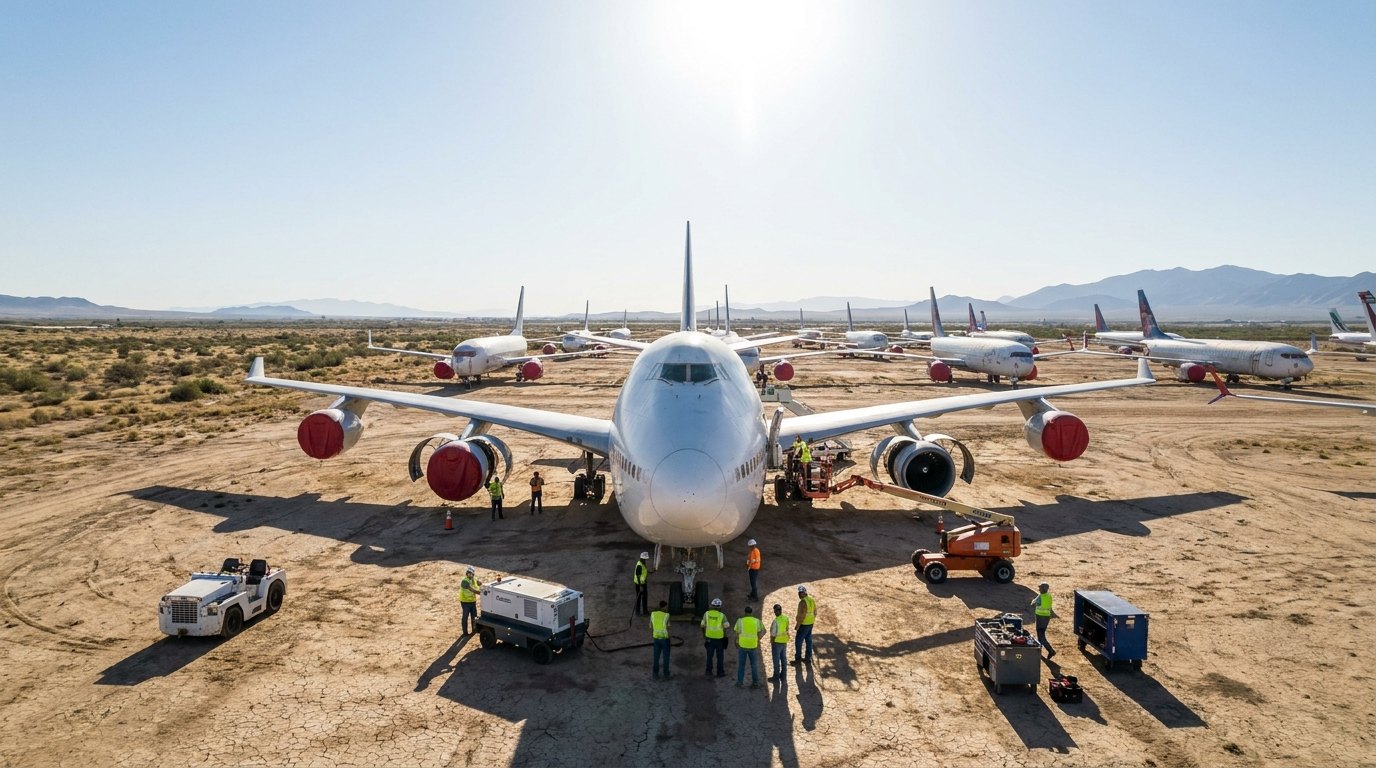
What is involved in ferrying an aircraft out of storage?
Moving a stored aircraft starts with a reactivation assessment: preservation removal, engine and APU runs, fluid and filter checks, tyre and brake condition, and a functional check of pressurisation, navigation and communications. Most stored aircraft then move on a special flight permit with limitations that shape the route.
Key takeaways
- Reactivation drives the timeline more than the flight does
- Expect permit limitations and plan the route around them
- Pressurisation and navigation faults are the most common launch blockers
- Part-out positioning still needs the same permit and insurance discipline
The reactivation reality
An aircraft that has been parked for six months is not a flight away from moving. Preservation has to be removed, engines and APU run, control surfaces exercised, tyres and brakes assessed, and time-expired items addressed. The flight itself is often the shortest part of the project.
Plan the route around the permit
Stored aircraft frequently move with an inoperative item covered by a permit limitation. Unpressurised or altitude limited flight changes fuel burn, range and the tech stop chain entirely, and it changes the weather the crew can accept.
- Lower cruise altitude means shorter legs and more stops
- Day VFR limitations remove night departures from the plan
- Restricted airspeed extends duty time on every sector
Crew currency and type experience
A stored airframe with a degraded systems fit is not the place for minimum experience. We crew these movements with captains who have flown the type in ferry configuration before and who have handled permit limited operations previously.
Part-out positioning
Aircraft heading to teardown are still aircraft. The permit, the insurance, the crew qualification and the arrival documentation are the same discipline as a delivery to a new operator, even though the airframe never flies again.
Common questions
Last reviewed June 10, 2026 by the Super Universal operations desk.